Elizabeth Bay and Punta Moreno, Isabela Island, 2/3/2019, National Geographic Endeavour II
Aboard the
National Geographic Endeavour II
Galápagos
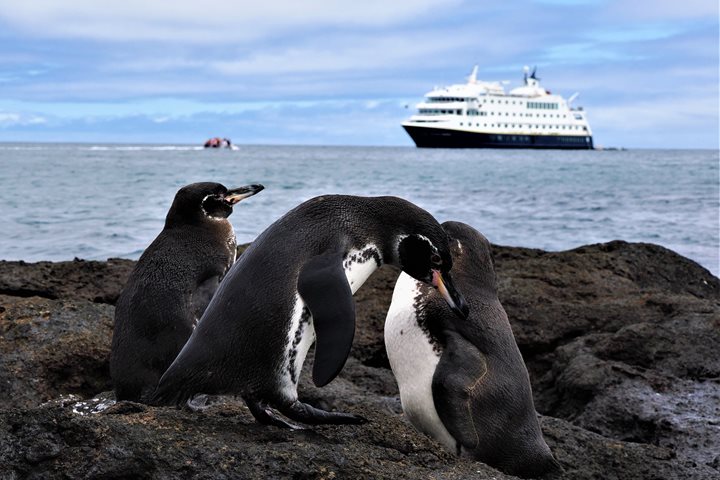
After our longest navigation of the week, the National Geographic Endeavour II sailed into the anchorage at the western end of the Perry Isthmus, the narrowest point on Isabela Island. Elizabeth Bay would become our gateway into the western realm of the archipelago, where we are planning to spend a full three days of our expedition. Here, guests had the chance to explore one of the oldest mangrove coves of the islands which teemed with marine wildlife from Pacific green sea turtles to Galapagos penguins. After a delicious Andean lunch, we visited Punta Moreno at the foot of Cerro Azul volcano where we explored from our Zodiacs, while snorkeling and hiking on the rugged volcanic landscape.
Ben is a German-Ecuadorian naturalist guide who grew up on San Cristobal, the eastern-most island of the Galápagos Archipelago, home to the political capital of the province.
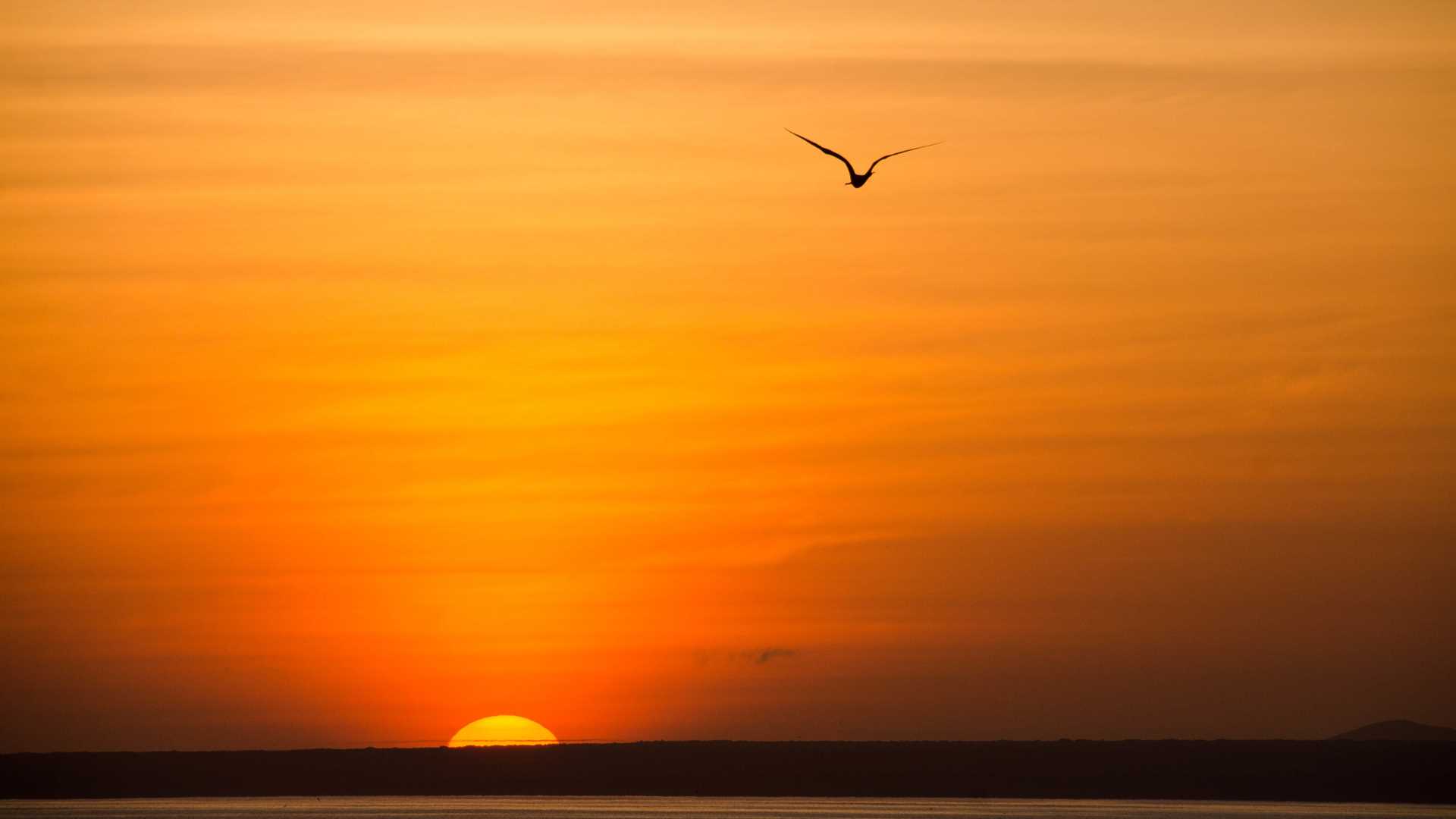
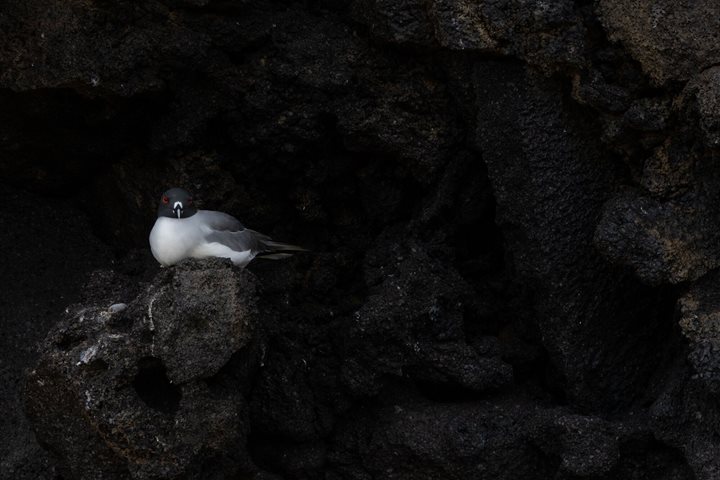
Today we finished our last day in paradise on Genovesa Island, one of the most exuberant and popular islands of the Galapagos. We started the morning by walking among red-footed boobies, frigatebirds, and swallow-tailed gull colonies around Darwin Bay. To close a very productive photo expedition week, we walked Prince Philip’s Steps at sunset. This gorgeous cliff is an airstrip for tropicbirds, petrels, and boobies. Guests were delighted to put to use new photo skills to collect memories, and thousands of new images are waiting to be organized and processed…
On National Geographic Endeavour II today, we explored Bartolome, home of a small colony of Galapagos penguins. Bartolome is one of the youngest islands, and it is located next to Santiago Island in the central part of the archipelago. After an amazing sunrise, we went ashore for a walk, and we were transported back to a time when the land was newly formed. We began our day by hiking to the top of a tuff cone known as the islet of Bartolome, named after the First Officer of The Beagle . Walking on this young island allowed us to understand the formation and volcanism of the Galapagos Islands. The rocks are a great way to understand the area and its geology. We spotted a few lava lizards and painted locusts, some of the very few animals on this island. As we reached the top, we had a great view. Our guests enjoyed the magnificence of Pinnacle Rock. After we visited one of the most iconic geological formations of the Galapagos, our breakfast was enhanced by dramatic views of the impressive volcanic landscape. We visited the beach near Pinnacle Rock, where we enjoyed how the sun made the sand sparkle due to a concentration of silica. Later, we went snorkeling along the channel between Santiago and Bartolome Islands. Many of our guests spotted whitetip reef sharks and very colorful parrotfish. The landscape was beautiful with lots of sea stars. We enjoyed the chance to be surrounded by Galapagos penguins and feel accepted as part of this environment. After a delicious Mexican lunch, we had lectures on the photography of reptiles and Darwin. Afterwards, we went to Chinese Hat Islet to snorkel from the Zodiacs. The area is home to a small colony of Galapagos penguins. In a sandy-bottomed, sheltered channel, our guests enjoyed swimming with whitetip reef sharks, rays, and many fish. It was a nice and sunny afternoon. After snorkeling, we had the chance to explore the unique, small volcano that formed an island in front of Santiago on a sunset Zodiac ride. After a spectacular day full of activities in the field, we returned on board. Every day in the Galapagos is an opportunity to reconnect with the beauty of nature through unbelievable encounters!
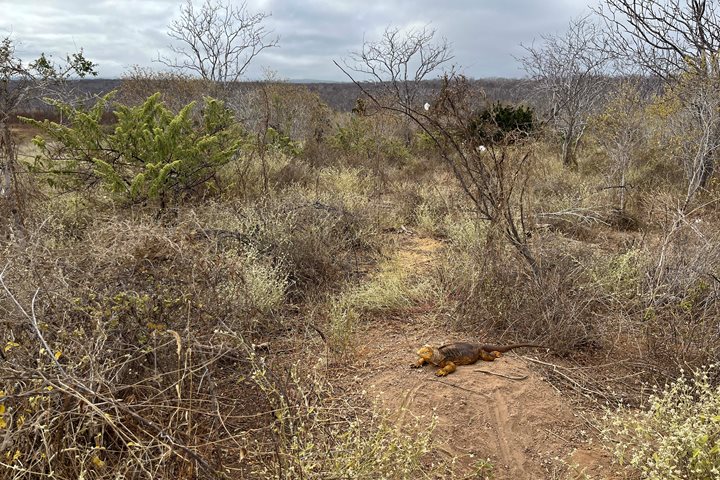
Today, National Geographic Endeavour II visited Cerro Dragon, located on the north part of Santa Cruz Island. We found one of the largest colonies of land iguanas. During our hike, we spotted the iguanas all around the trail. Some basked on the vegetation, and others were active. We saw the zigzag head movement they use to protect their territory and impress females. An Ecuadorian buffet lunch was set up in the dining room. We started with the traditional ceviche and ended with tres leches for dessert! We enjoyed snorkeling and Zodiac rides. We observed wildlife all over the place, including spotted eagle rays, sharks, blue-footed boobies, great blue herons, marine iguanas, and hundreds of other animals. They all reminded us why the Galapagos is so special.