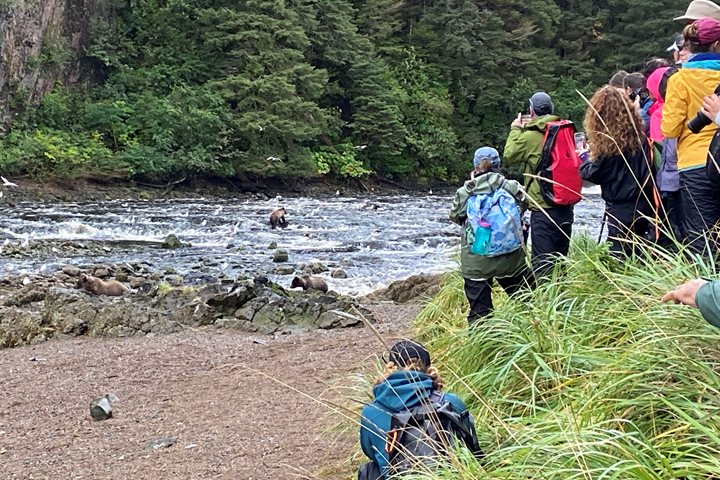
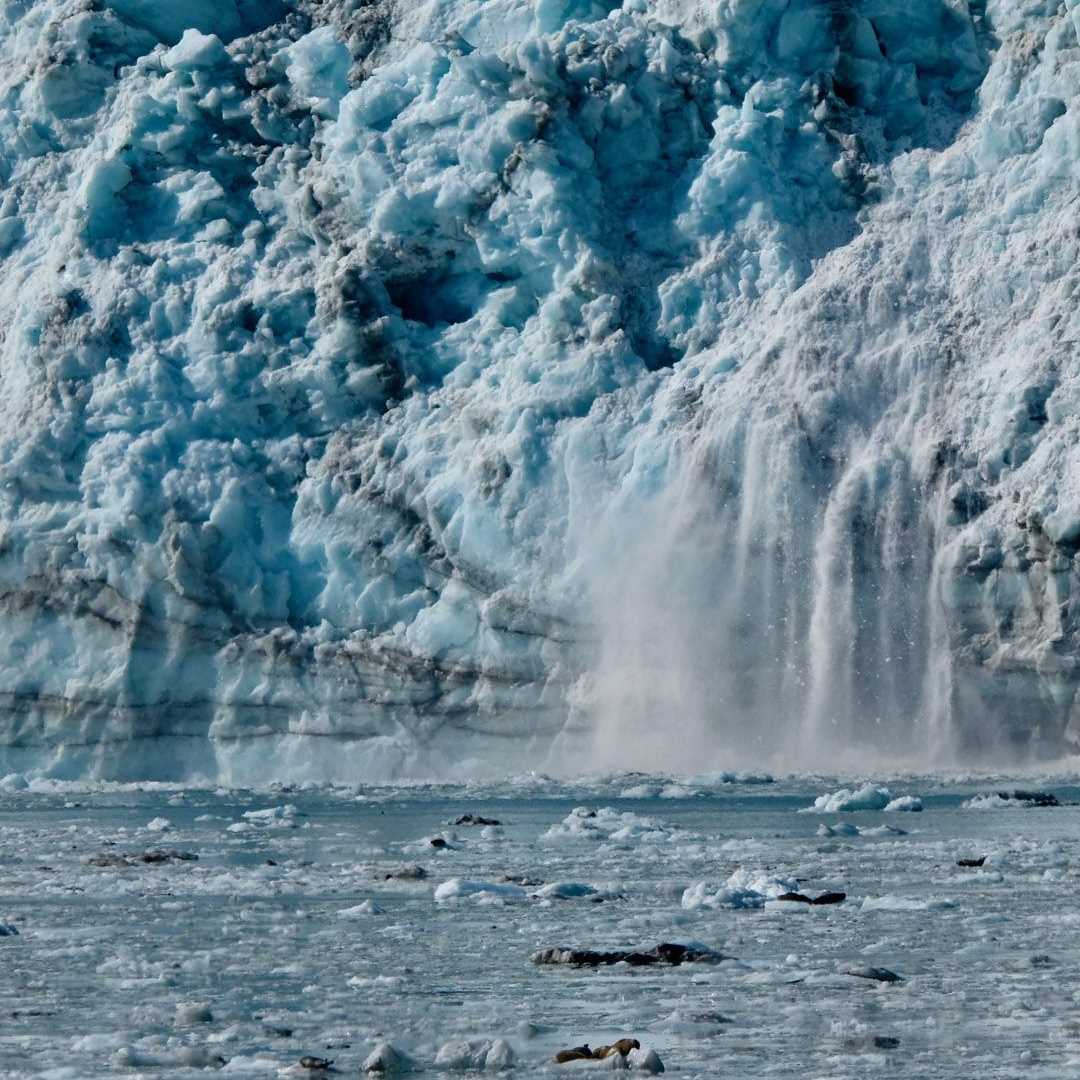
At 6 o’clock this morning, we woke to a magnificent scene—Margerie Glacier one quarter of a mile ahead of the ship, and the Grand Pacific Glacier off our starboard side. We stood on the bow holding warm cups of coffee, gazing at the masses of ice before us. George Vancouver had mapped the region in 1791, but he missed this bay for good reason—it didn’t yet exist. At that time, the Grand Pacific Glacier extended 65 miles further south. Since then the massive glacier has retreated, and now there is a fresh landscape of U-shaped valleys, rounded mountains, polished rock walls, streams, and alluvial fans. Plant life returns, but slowly, and in stages: first there are lichens, then a succession of pioneer plants, alders, and eventually spruce trees. We saw brown bears near the water and mountain goats grazing on high alpine meadows. Marine birds were abundant today: kittiwakes, glaucous-winged gulls, common murres, tufted puffins, pelagic cormorants, and thousands of scoters. Sea otters surfaced near the ship, harbor seals rested on bergy bits, and Steller sea lions grumbled at one another as they crowded on small rock ledges. Glacier Bay is a raw and beautiful landscape, and a habitat that is still evolving as ice continues to retreat.
9/3/2022
Read
National Geographic Quest
Ushk Bay and Peril Strait
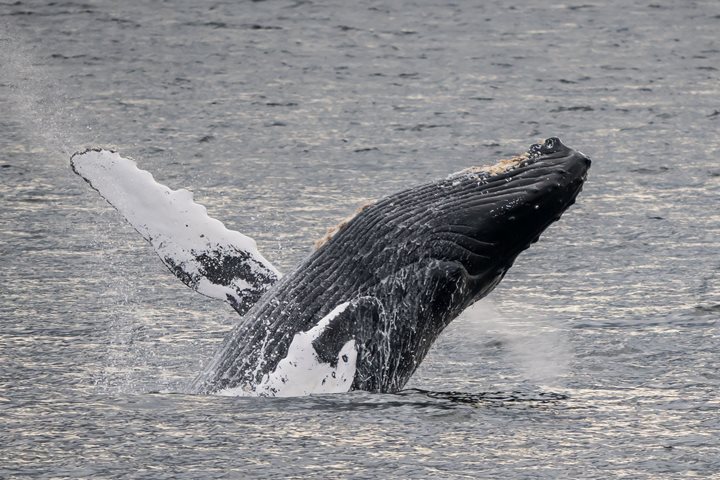
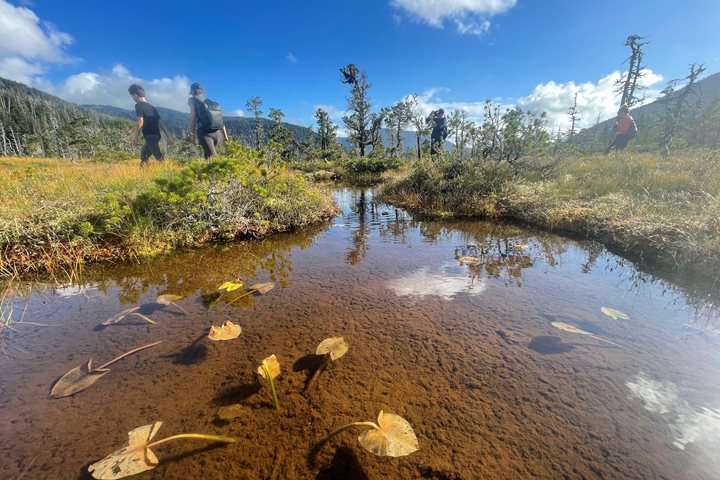
National Geographic Quest arose amidst light clouds within the protected waters of Ushk Bay. This area is known for a salmon stream and yields plenty of opportunity for kayaking and exploring the vast meadows of its inner waterways. On this day’s occasion, guests were able to hike and paddle their way along the coast of Ushk Bay and witness firsthand the life cycle of Pacific salmon making their way upstream. As we transited through Peril Strait, we were lucky to see humpback whales. These immense mammals were “lunge feeding” very near our ship. Being able to witness this event was unique for guests and staff. Lunge feeding is process through which individual whales push their gaping mouths through the surface and collect any fish or planktonic invertebrates in the process. Witnessing this behavior was truly a remarkable experience for all. We will cherish this moment for a lifetime.