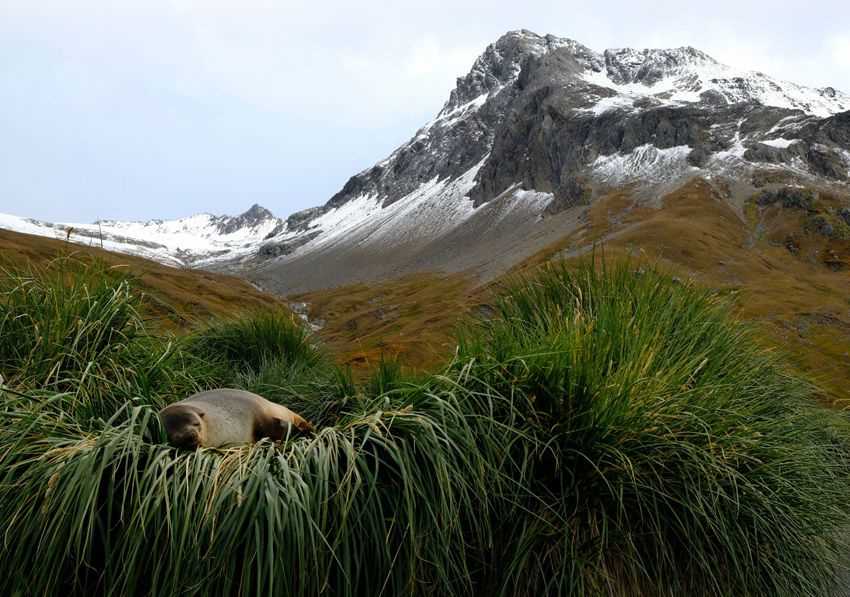
South Georgia is an extremely remote and rugged island, situated far to the northeast of the Antarctic Peninsula and surrounded by the cold and wild Southern Ocean. About half of it is covered by ice, and glaciers flow down its valleys to the sea. Even so, during the summer, millions of seals and a mind-boggling 65 million seabirds mate, raise young, and molt in its ice-free places. In the 1800s and 1900s, sealers and later whalers hunted until there were no more animals to be found. Today we saw seals in abundance, and just offshore, two blue whales! At Grytviken, we visited Shackleton’s grave and the whaling station and museum. Just down the coast at Ocean Harbour, many of us enjoyed a hike up along the ridge overlooking the valley and harbor.
- Daily Expedition Reports
- 26 Feb 2019
Grytviken & Ocean Harbor, South Georgia, 2/26/2019, National Geographic Explorer
- Aboard the National Geographic Explorer
- Antarctica
Berit Solstad, Naturalist
Berit grew up on the rocky shores of Marblehead, Massachusetts. In the tidal cove behind her family’s home she found horseshoe crabs, eels, and feeding frenzies of fishes and birds. Low tides exposed clam flats, crabs, mussels, and snails. She explor...
Read MoreEric Wehrmeister, Video Chronicler
Eric began his life on the far western edge of Chicago, where the concrete meets the cornfields. His inspiration has always drawn from the expansive beauty of the natural world, as well as the endless forms that populate it.
Read MoreShare Report
Antarctica, South Georgia and the Falklands
VIEW ITINERARYRelated Reports
3/13/2022
Read
National Geographic Explorer
Tierra del Fuego
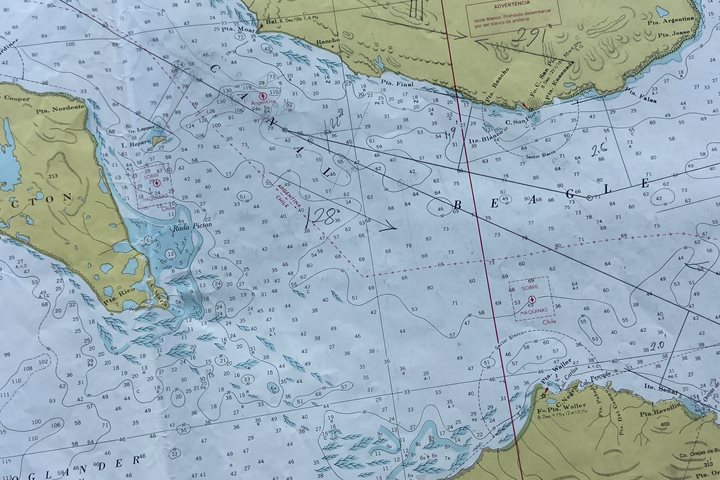
Until now, we have skirted the mercurial weather of the South Atlantic. Though the sun has been rare, we have been lucky with calm seas and easy access to some of the most exciting landing sights South Georgia and the Falklands have to offer. Today, as our trip nears its end, we had the opportunity to experience a small taste of the conditions that make this such a notorious region for seafarers and explorers. With sustained winds of up to 50 knots wrapping around Cape Horn, the ocean quickly began to churn. Our captain and bridge team found us shelter in the Beagle Channel where we spent the day appreciating the power of the ocean and the biodiversity of Tierra del Fuego. While onboard in the comfort of our new ship/home, National Geographic photographer Camille Seaman shared a collection of photographs she took throughout the last two weeks. Naturalists Madalena Pachaco and Bud Lenhausen shared stories of exploration and changing climates. Photo caption: The chart shows our way to protection from the storm in the Beagle Channel. Photo by Alex Krowiak
3/12/2022
Read
National Geographic Resolution
Le Maire Strait and Beagle Channel
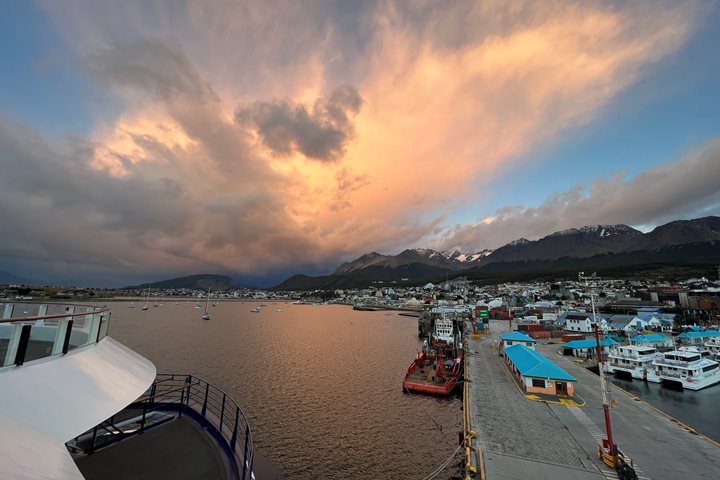
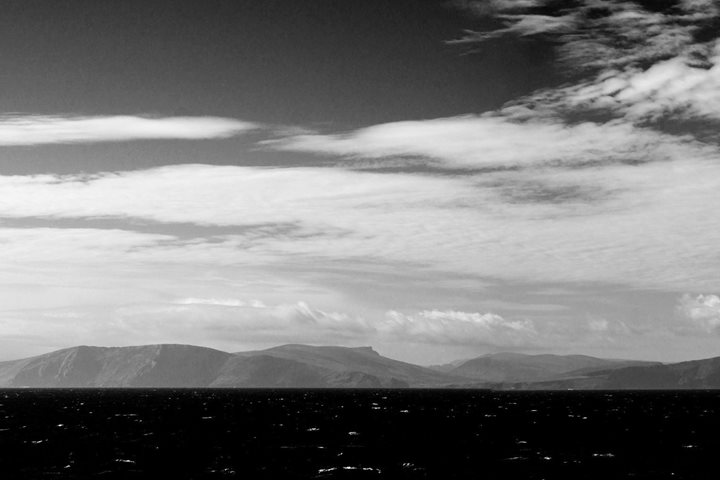
We continued sailing from the Falkland Islands to Ushuaia, crossing the Le Maire Strait and entering the Beagle Channel. On our way, we enjoyed spectacular landscapes as seabirds followed us.